
All in One Domain and Hosting That Scales
Choose all in one domain and hosting to register, launch, email, store, and scale from one dashboard with clear pricing and less setup work faster today.
ACMMAX Insights ·
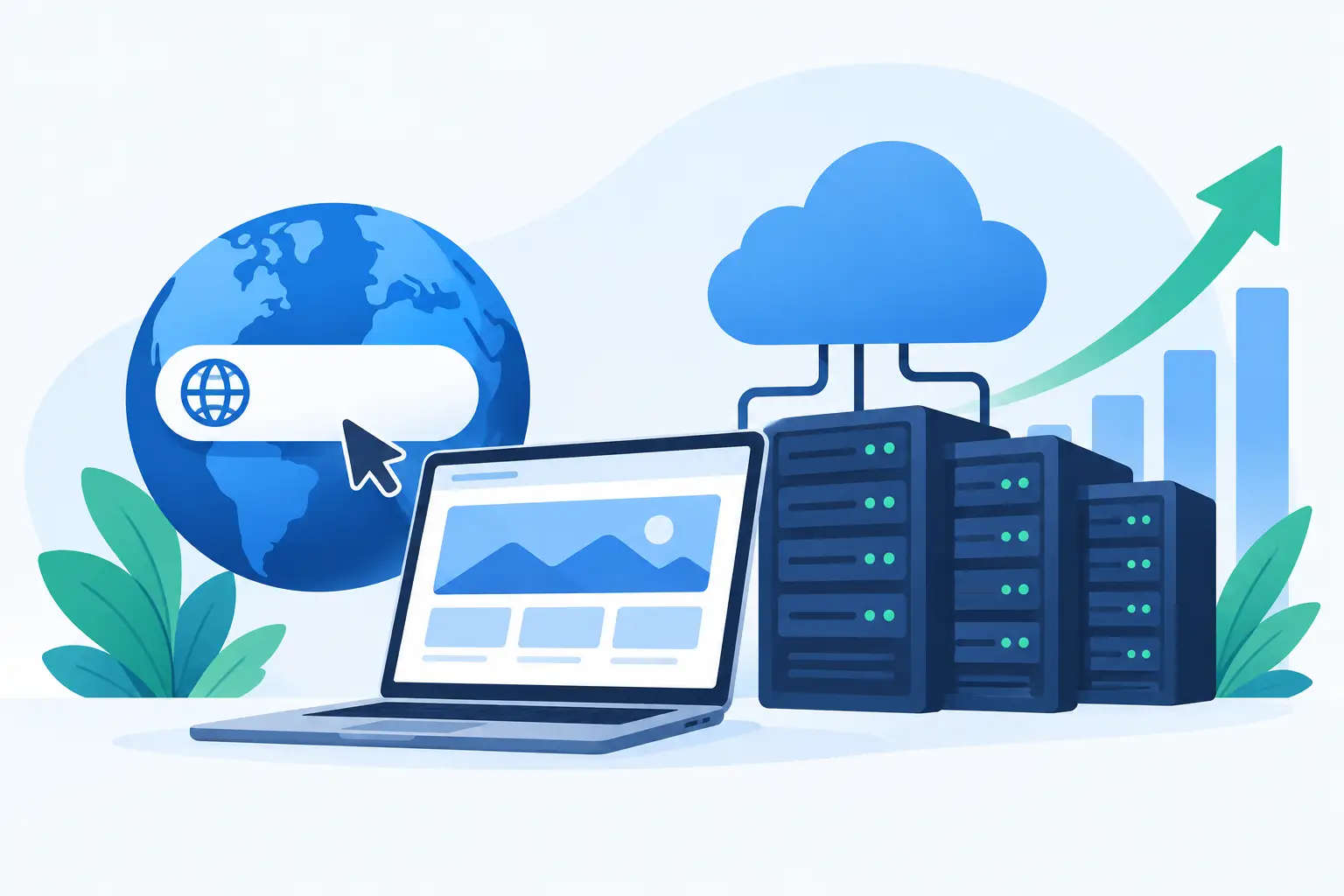
A domain is the front door of your business. Hosting is the property behind it. Add business email, website tools, backups, storage, and cloud resources, and a simple online launch can quickly turn into five separate logins, five billing cycles, and five places for something to break.
That is why all in one domain and hosting has become a practical choice for entrepreneurs, agencies, and growing online businesses. The point is not to buy every digital service available. The point is to run the services you actually need from one account, with less setup work, clearer ownership, and a faster path from idea to live website.
What All in One Domain and Hosting Actually Means
All in one domain and hosting combines the essentials of an online presence under one provider. At the minimum, that means domain registration and web hosting. A stronger platform also brings together business email, managed WordPress, cloud virtual machines, object storage, website creation, SSL management, billing, and support.
This is not simply a bundle. It is an operating model. Instead of registering a domain with one company, pointing DNS through another, hosting a site elsewhere, and paying a fourth provider for email, you manage the stack from a central dashboard.
For a new business, that can mean getting a domain, launching a branded website, and creating a professional email address in the same working session. For an agency, it can mean managing client sites and infrastructure without constantly switching accounts. For developers, it can mean moving from a basic site to a cloud VM or object storage without rebuilding vendor relationships from scratch.
The trade-off is worth understanding. A specialized provider may offer a highly specific advanced feature that a consolidated platform does not. If your operation requires niche enterprise security controls, global multi-cloud architecture, or a unique mail-compliance workflow, separate best-of-breed tools may still be the right move. For most small and mid-sized businesses, though, fragmented tools create more operational drag than strategic advantage.
The Hidden Cost of a Fragmented Setup
The monthly price of individual services is only part of the cost. The bigger expense often appears in the gaps between providers.
A domain renewal notice goes to an inbox nobody monitors. DNS records are updated in the wrong dashboard. An email issue gets passed from the registrar to the host and back again. A freelancer leaves, and the company cannot find the account that controls its domain. None of these failures are technically complicated, but each can take a website or business email offline at exactly the wrong time.
Centralization reduces those handoffs. When the domain, hosting, email, and website tools are connected through one platform, there are fewer credentials to manage, fewer invoices to reconcile, and fewer support teams involved when a change is needed.
That matters most when speed is revenue. A consultant launching a new offer, a store running a promotion, or an agency onboarding a client does not need another week of technical coordination. They need a reliable setup that can go live quickly and be maintained without a full-time infrastructure team.
What a Complete Platform Should Include
Not every bundle is equally useful. A low introductory price is not enough if the platform leaves out the services that make daily operations easier. Look for a practical mix of the following capabilities:
| Capability | What it solves for your business |
|---|---|
| Domain registration and privacy | Secures your brand name and keeps domain ownership organized |
| Managed web hosting | Runs your website without requiring server administration for routine work |
| Business email | Lets you communicate from a branded address instead of a personal inbox |
| Website builder or WordPress tools | Helps you publish quickly, with or without coding skills |
| Cloud virtual machines | Supports custom applications, development environments, and higher-control workloads |
| Object storage | Holds backups, media files, application assets, and growing volumes of data |
| SSL, DNS, and account controls | Keeps critical configuration close to the services that depend on it |
The value comes from how these services work together. A website builder is more useful when the domain connection is straightforward. Business email is more useful when DNS settings can be managed in the same account. Object storage becomes easier to adopt when it sits next to the hosting or cloud environment that uses it.
Start Simple, Then Add Capacity
A complete platform should not force a first-time website owner into an advanced cloud configuration. The best setup starts with the service that matches the immediate job.
For a portfolio, local business site, landing page, or blog, managed WordPress hosting or an AI website builder may be enough. You can focus on pages, branding, forms, and content while the platform handles the core hosting environment.
For a custom web application, a developer may need a cloud virtual machine with root-level flexibility, chosen resources, and pay-as-you-go usage. For media-heavy sites or applications that need independent storage, S3-compatible object storage can be added without moving everything to a new vendor.
That flexibility matters because businesses rarely stay at one technical stage. The right all in one domain and hosting provider supports a fast launch without limiting the next phase of growth.
How to Choose the Right Setup
Start with the workload, not the largest plan on the page. Ask what must be live in the next 30 days, what will need to scale in the next 12 months, and who will manage it.
If you are launching a first site, prioritize simple deployment, transparent renewal pricing, business email, and support that can help with common setup tasks. A platform with instant activation and clear controls can remove the friction that causes projects to stall before launch.
If you run client websites, look for practical management features: separate projects or environments, dependable hosting, straightforward DNS controls, predictable costs, and the ability to add services as clients grow. Agencies benefit when they can offer domains, hosting, email, and site delivery without routing clients through multiple third parties.
If you are a developer or technical operator, assess the infrastructure details. Check available virtual machine resources, operating system options, storage compatibility, backups, performance expectations, usage billing, and the level of control you retain. Convenience should not come at the cost of the capabilities your application requires.
Pricing deserves a closer look as well. Entry-level offers can be useful, but compare renewal rates, included resources, overage charges, email mailbox limits, storage usage, and support coverage. Transparent low-cost pricing is valuable because it allows you to plan growth instead of being surprised by it.
A Better Launch Sequence
A centralized platform makes launching easier, but a clean order still prevents mistakes. First, register the domain in an account owned by the business, not an employee or contractor. Enable domain privacy where available and set renewal reminders.
Next, choose the hosting product based on the site or application you are building. Connect the domain, activate SSL, and publish a basic version of the site before spending weeks on optional features. A live, clear, functional website is more valuable than a perfect draft nobody can access.
Then create branded email addresses for the people who represent the business. Use role-based addresses where helpful, such as support, sales, or billing, so communication does not depend on one person's inbox.
Finally, document account ownership, recovery details, domain settings, and renewal responsibilities. Centralized infrastructure lowers risk, but only if the business maintains control of the central account.
When One Platform Delivers the Most Value
All-in-one infrastructure is especially effective when the business needs momentum. A freelancer launching a new service can establish a domain, branded email, and professional website without building a patchwork of tools. A small business can keep its online identity and core systems together as it adds marketing, software, or storage needs. An agency can reduce administrative work while delivering a more complete setup to clients.
ACMMAX is built around this model, bringing domains, managed hosting, cloud resources, business email, object storage, and website creation into one account with practical options for both beginners and technical users. The goal is simple: deploy faster, pay for what you need, and keep the essentials under control.
The strongest reason to consolidate is not convenience alone. It is the ability to spend less time chasing settings, invoices, and vendor handoffs, then put that time into the website, product, campaign, or customer experience that actually moves the business forward.

